




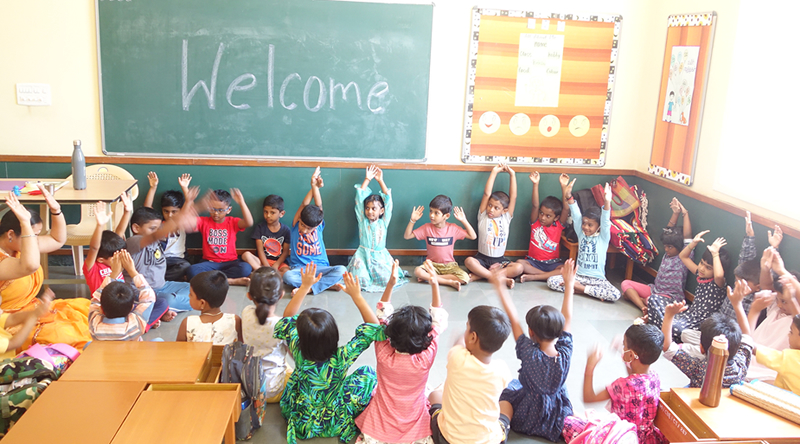
The early years of a child’s life are often described as the most influential phase of development. During this time, children form the foundation for how they think and interact with the world around them.
Long before formal academics begin, young minds require guidance and care in a joyful environment.
Pre-primary education is not merely a stepping stone to primary school; it is a powerful stage that shapes a child’s learning attitude.
Understanding its purpose and value helps parents make informed decisions that can positively impact their child’s lifelong learning journey.
What Is Pre-Primary Education?
To truly appreciate its value, it is important to first understand the scope of early childhood education (ECE).
It refers to the early stage of organized learning designed for children typically between the ages of 2 and 6 years. It includes programs such as
- Playgroup
- Nursery
- Lower kindergarten (LKG)
- Upper kindergarten (UKG)
Unlike traditional schooling, pre-primary education focuses on learning through play, exploration, and hands-on experiences.
At this stage, children are not expected to memorize facts or complete academic tasks under pressure. Instead, they are encouraged to learn naturally through activities such as storytelling, music, games, and outdoor play.
Pre-primary education introduces children to basic concepts like letters, numbers, shapes, colours, and patterns in an engaging way.
More importantly, it helps children develop communication skills and social awareness.
By creating a safe and nurturing environment, pre-primary education allows children to express themselves freely and build confidence in their abilities.
Understanding Pre-Primary Education in the Modern Context
Nowadays, the role of pre-primary education has evolved significantly. The modern pre-primary programs focus on holistic development rather than rote learning.
Schools now emphasize experiential learning and inquiry-based teaching methods.
Technology, storytelling, sensory play, and creative expression are often integrated into the curriculum to make learning more meaningful. Children are encouraged to ask questions, experiment, and discover solutions on their own. This approach helps them develop problem-solving skills from a very young age.
Additionally, pre-primary education introduces children to routines in a gentle manner. Daily schedules, group activities, and guided tasks help children develop responsibility and all the essential skills for their future academics.
Objectives of Pre-Primary Education
The objectives of pre-primary education are designed to support a child’s overall development rather than focusing solely on academics.
These objectives aim to nurture the child intellectually.
One of the primary objectives is to support language and communication development. Through conversations, storytelling, rhymes, and songs, they learn to express their thoughts confidently.
Another key objective is the development of motor skills. Activities such as drawing, colouring, cutting, climbing, and playing with toys help strengthen fine and gross motor abilities.
Social and emotional development is also a central focus. Pre-primary education encourages children to interact with peers. They learn important life skills such as cooperation and respect for others.
Creativity and imagination are nurtured through art, music, dance, and pretend play. These activities allow children to explore their ideas freely and build self-expression. At the same time, cognitive skills such as logical thinking are strengthened through puzzles, games, and interactive learning experiences.
Importance of Pre-Primary Education
The importance of pre-primary education cannot be overstated, as it forms the backbone of a child’s educational journey.
Studies across the world have consistently shown that children who receive quality early education perform better academically.
One of the most significant benefits is school readiness. Children become familiar with classroom environments and this reduces fear and anxiety when they enter primary school.
They learn how to follow instructions, sit in groups, and participate actively in learning activities.
Pre-primary education also supports brain development during a critical period of growth. Early experiences help strengthen neural connections and learning capacity.
Another key aspect highlighting the importance of pre-primary education is social development. Interacting with peers helps children understand social norms and build friendships.
The Role of Teachers in Pre-Primary Education
Qualified and compassionate educators play a crucial role in this.
Teachers act as facilitators and understand each child’s unique learning style and pace.
Rather than instructing in a rigid manner, pre-primary teachers create environments that encourage exploration and interaction.
They use storytelling, music, movement, and play-based activities to make learning engaging. Their role also involves supporting emotional well-being and helping children feel valued and understood.
How Pre-Primary Education Supports Parents
It not only benefits children but also supports parents in understanding their child’s developmental needs.
Regular communication between teachers and parents helps track progress and address challenges early.
At this time, parents gain insights into their child’s social behaviour too. This approach ensures consistency between home and school environments and creates a strong support system for the child.
Importance of Pre-Primary Education in Building Lifelong Skills
Beyond academics, the importance lies in its ability to equip children with essential life skills.
Those skills are,
- Problem-solving
- Adaptability
- Teamwork
- Resilience
Moreover, they learn how to cope with change and handle simple challenges independently.
These skills form the foundation for success not only in school but also in life.
Conclusion
Understanding pre-primary education helps parents recognize why the early years are so crucial in a child’s development.
With clear objectives and a strong focus on holistic growth, this stage nurtures confident and curious learners.
The pre-primary school not just shapes academic success, but also emotional well-being and a lifelong love for learning.
By investing in quality education, parents give their children the strongest possible start toward a successful future.
FAQs
1. At what age should a child start pre-primary education?
Most children begin pre-primary education between the ages of 2 and 3 years, starting with playgroup or nursery. However, the right age depends on the child’s readiness, comfort level, and emotional development.
2. Is pre-primary education only about academics?
No, pre-primary education is not focused on academics alone. It emphasizes holistic development through play, storytelling, music, art, movement, and hands-on experiences, helping children learn naturally without pressure.
3. What teaching methods are used in modern pre-primary education?
Modern pre-primary programs use play-based learning, experiential activities, inquiry-based teaching, storytelling, sensory play, and creative expression to make learning engaging and meaningful.
4. What life skills do children gain from pre-primary education?
Children develop essential life skills such as problem-solving, adaptability, teamwork, resilience, independence, and coping with change—skills that support success throughout life.
5. Is play really important in early childhood education?
Yes, play is a vital part of early learning. Through play, children explore ideas, build creativity, strengthen social skills, and develop cognitive abilities in a natural and enjoyable way.
6. What should parents look for in a good pre-primary school?
Parents should look for a safe and nurturing environment, trained teachers, a play-based curriculum, good communication with parents, and a focus on holistic development rather than rote learning.