




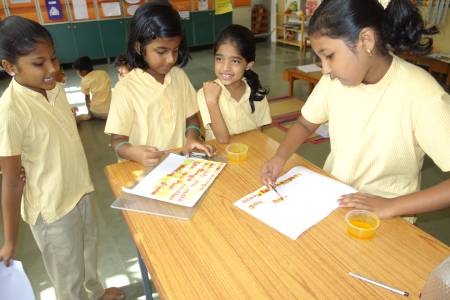
As children move from primary years into adolescence, their learning needs begin to change in meaningful ways. This stage requires a careful balance between academic structure and the freedom to explore ideas independently. The cambridge lower secondary framework is designed to meet these evolving needs, offering a steady and thoughtful progression in learning.
For many parents, understanding how the cambridge lower secondary stage supports both academic readiness and personal growth is an important part of choosing the right school. The Cambridge Lower Secondary programme provides clarity in this regard by combining strong subject foundations with skill-based development.
Understanding the Cambridge Lower Secondary Stage
The cambridge lower secondary stage typically caters to students between the ages of 11 and 14. It serves as a bridge between primary education and more advanced academic programmes. During these years, children begin to think more critically, question more deeply, and engage more actively in their learning.
The Cambridge Lower Secondary programme is structured to support this shift. It focuses on core subjects such as English, Mathematics, and Science, while also allowing room for broader areas of learning like global perspectives and digital literacy.
What stands out in the cambridge lower secondary approach is its flexibility. Schools can adapt the curriculum to suit their learning environment while maintaining internationally recognized standards. This ensures that students receive an education that is both relevant and rigorous.
Strengthening Academic Foundations
A key aspect of the cambridge lower secondary stage is the emphasis on building strong academic fundamentals. At this level, students move beyond basic understanding and begin to engage with concepts in a more detailed and applied manner.
In English, learners develop skills in comprehension, structured writing, and effective communication. Mathematics focuses on reasoning, patterns, and problem-solving rather than rote methods. Science encourages observation, experimentation, and logical thinking.
The Cambridge Lower Secondary programme ensures that these subjects are taught in a way that gradually increases complexity without overwhelming the learner. This steady progression helps students gain confidence in their abilities while maintaining curiosity.
Developing Critical Thinking Skills
One of the most valuable outcomes of the cambridge lower secondary stage is the development of critical thinking. Students are encouraged to analyze information, ask questions, and explore multiple perspectives.
The Cambridge Lower Secondary programme integrates inquiry-based learning into everyday classroom experiences. Instead of simply receiving information, students participate in discussions, research activities, and collaborative projects.
This approach helps children become active learners. In the cambridge lower secondary environment, they begin to understand not just what to learn, but how to learn. This distinction plays a significant role in preparing them for future academic challenges.
Assessment That Guides Growth
Assessment in the cambridge lower secondary framework is designed to support learning rather than create pressure. Regular evaluations provide insights into a student’s progress and help identify areas that need attention.
The Cambridge Lower Secondary programme includes tools such as checkpoint assessments and continuous feedback. These methods allow teachers to adjust their instruction and offer targeted support.
For students, this means a clearer understanding of their strengths and areas for improvement. For parents, it provides a more complete picture of their child’s development within the cambridge lower secondary stage.
Encouraging Global Awareness
As students grow, it becomes important for them to understand the world beyond their immediate surroundings. The cambridge lower secondary approach introduces learners to global ideas and perspectives in a structured manner.
Through components of the Cambridge Lower Secondary programme, students engage with real-world topics, cultural diversity, and global challenges. They learn to think about issues from different viewpoints and express their ideas with clarity.
This exposure helps build empathy, awareness, and adaptability. The cambridge lower secondary stage plays an important role in shaping students into thoughtful and responsible individuals.
Supporting Holistic Development
Academic growth is only one part of a child’s journey. The cambridge lower secondary stage also emphasizes the importance of co-curricular and personal development.
Students are encouraged to participate in activities such as arts, sports, and collaborative projects. These experiences complement the academic structure of the Cambridge Lower Secondary programme and contribute to the development of confidence, teamwork, and resilience.
At this age, children are exploring their interests and discovering their strengths. The cambridge lower secondary environment provides the support and flexibility needed for this exploration.
Preparing for Future Academic Pathways
The cambridge lower secondary stage lays a strong foundation for higher levels of education, including programmes such as IGCSE. The skills developed during these years are essential for handling more advanced academic expectations.
The Cambridge Lower Secondary programme focuses on building analytical thinking, structured expression, and independent learning habits. These skills ensure that students are well-prepared for the next stage of their academic journey.
By the end of the cambridge lower secondary stage, learners are better equipped to manage increased academic demands with confidence and clarity.
The Role of Teaching and Learning Approaches
The success of the cambridge lower secondary framework depends largely on how it is implemented in the classroom. Teaching methods play a crucial role in shaping student experiences.
In the Cambridge Lower Secondary programme, educators act as facilitators who guide students through exploration and discovery. Lessons are interactive, discussions are encouraged, and students are given opportunities to express their ideas.
This creates a supportive learning environment where students feel comfortable taking academic risks. The cambridge lower secondary approach ensures that learning is not limited to textbooks but extends to meaningful engagement.
Building Independent and Confident Learners
One of the long-term goals of the cambridge lower secondary stage is to nurture independence in learning. Students are gradually encouraged to take responsibility for their studies, manage their time, and reflect on their progress.
The Cambridge Lower Secondary programme supports this by providing structured guidance while allowing space for self-directed learning. Over time, students develop confidence in their abilities and a sense of ownership over their education.
These qualities are essential not only for academic success but also for personal growth. The cambridge lower secondary experience helps students become capable and self-aware learners.
Conclusion
The transition from primary to higher levels of education is a significant phase in a child’s life. The cambridge lower secondary framework offers a balanced and thoughtful approach to navigating this stage.
Through the Cambridge Lower Secondary programme, students gain strong academic foundations, develop critical thinking skills, and grow into confident individuals. The emphasis on both learning and personal development ensures that children are prepared not just for exams, but for the broader challenges of the future.
For parents exploring meaningful educational pathways, the cambridge lower secondary stage provides reassurance that their child is receiving an education that values depth, understanding, and holistic growth.
FAQ:
1. What is the Cambridge Lower Secondary programme?
The Cambridge Lower Secondary programme is an academic stage designed for students aged 11 to 14, acting as a bridge between primary education and advanced programmes while building strong subject knowledge and skills.
2. How does the Cambridge Lower Secondary programme prepare students for higher studies?
The Cambridge Lower Secondary programme develops critical thinking, problem-solving, and independent learning skills, which prepare students for advanced stages like IGCSE and beyond.
3. What subjects are included in the Cambridge Lower Secondary stage?
The Cambridge Lower Secondary stage focuses on core subjects such as English, Mathematics, and Science, along with areas like global perspectives and digital literacy to support overall development.
4. How are students assessed in the Cambridge Lower Secondary programme?
Students are assessed through continuous feedback, classroom activities, and checkpoint assessments that track progress and help improve understanding without creating excessive exam pressure.
5. What skills do students gain in the Cambridge Lower Secondary stage?
Students develop critical thinking, communication, collaboration, and independence, helping them become confident learners ready for future academic and real-world challenges.